When I first started sourcing earbuds for our brand, I thought the specs sheet told the whole story. Impedance, driver size, frequency response — check the boxes, place the order, done. It took a few painful production cycles and one very unhappy retail partner to teach me that the manufacturer behind the product matters just as much as the product itself.
That lesson hit hardest when we started working with ENC technology.
What ENC Actually Demands From a Factory
Environmental Noise Cancellation isn’t passive noise isolation — it’s active signal processing. The microphone placement has to be precise. The firmware tuning matters enormously. And the consistency between Unit #1 and Unit #50,000 off the line? That’s where most factories quietly fall apart.
I’ve auditioned samples from facilities that produced beautiful prototypes but couldn’t hold tolerance at scale. The ENC would be clean in the sample room and muddy in the third production batch. Call pickup quality would vary unit to unit. That kind of inconsistency kills your return rate and your reputation simultaneously.
A credible ENC earbuds manufacturer needs to demonstrate three things before I’ll commit volume:
- Anechoic chamber or equivalent acoustic testing environment — not just software simulation
- Mic array calibration protocols baked into the production line, not just QC at the end
- Firmware co-development capability — because the hardware and the DSP tuning have to talk to each other
Most contract manufacturers can tick one or two of those boxes. Finding one that genuinely covers all three is genuinely rare.
Working With Tashells Audio
A colleague in the OEM space pointed me toward Tashells Audio about two years ago, and it’s been one of the more productive manufacturer relationships I’ve had.
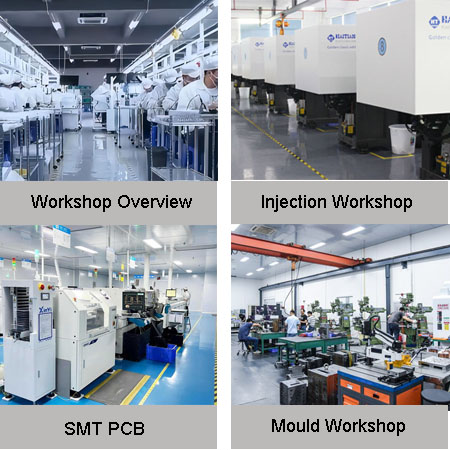
What stood out early on wasn’t the marketing pitch — it was the factory walk-through. Their acoustic engineering team was clearly not just a sales support function. These were people who had opinions about mic placement, who pushed back on my initial design brief because of how it would affect wind noise rejection at 15km/h. That kind of friction is actually a good sign. It means the factory is invested in the outcome, not just the PO.
Their ENC implementation process involves calibrating each batch against reference audio profiles, which is something I hadn’t seen done as systematically at other suppliers. The result is tighter consistency across units — and in the TWS category, consistency is everything when you’re dealing with stereo ENC pairs that need to perform symmetrically.
They also offer white-label and semi-custom routes, which matters depending on your market position. If you’re launching a branded line and you want some hardware differentiation — shell design, driver tuning, even custom ENC profile — they can work through that process with you rather than just handing you a catalog SKU with your logo on it.
The Questions You Should Be Asking Any ENC Earbuds Manufacturer
After going through this process more times than I’d like to count, here’s the due diligence checklist I now run through before engaging seriously with any supplier:
1. Can you show me your ENC test data across a production run, not just a prototype? Prototype performance is table stakes. Ask for data from a 500-unit or 1,000-unit batch. Variance in the numbers tells you more than the average does.
2. What chipset are you using, and do you have access to the DSP layer? Some manufacturers are essentially assemblers working with a locked chipset solution. That limits your ability to differentiate and iterate. A factory with real firmware access gives you a roadmap, not just a product.
3. How do you handle ENC profile tuning for different use cases? Office environments, commuting, outdoor use — these have meaningfully different noise profiles. A one-size-fits-all ENC preset is a red flag.
4. What’s your rejection and rework rate on ENC-specific failures? This one makes some factories uncomfortable, which is informative in itself.
The Broader Market Reality
The TWS earbud market has matured enough that ENC is no longer a premium differentiator — it’s an expectation, even at mid-range price points. That means the bar for what constitutes acceptable ENC performance keeps rising, and the pressure on manufacturers to deliver it consistently and cost-effectively is real.
The ENC earbuds manufacturer landscape has consolidated somewhat around a handful of facilities in the Pearl River Delta and surrounding regions that have genuinely invested in acoustic R&D rather than just buying the reference design and calling it done. Tashells Audio sits in that more capable tier, in my experience — and for brands that are serious about audio quality rather than just hitting a spec on paper, that distinction matters.
Final Thought
If you’re in the early stages of sourcing ENC earbuds — whether for a private label launch, a corporate gifting program, or a full consumer brand rollout — spend more time vetting the factory than negotiating the unit price. A supplier who can actually deliver consistent, well-tuned ENC at scale is worth a few cents more per unit every single time.
The returns, the customer complaints, and the brand damage from inconsistent noise cancellation will cost you far more.